
PREPARING YOUR OEM/ODM PRODUCT BRIEF
Executive Summary
A clear OEM/ODM brief can potentially turn a product idea into information a manufacturing partner can assess. It explains who the product is for, what it should do, the preferred format and features, its market position, and the project’s budget, order volume, and target launch date. You do not need every technical detail before making contact. You do need to show what is confirmed, what is preferred, and what still needs discussion.
Preparing Your OEM/ODM Product Brief
An OEM/ODM brief is a crucial working document that explains the product idea and its key requirements. It does not need to include a finished formula or technical specification. Its purpose is to give a manufacturing partner enough information to discuss feasibility, development, costs, and timing.
Research on new product development highlights the value of understanding customer needs and using market information to guide product decisions (Fakhreddin & Foroudi, 2022; Maier & Baccarella, 2025). Studies also indicate that supplier involvement can bring useful knowledge into development, although its value depends on the timing and form of collaboration (Picaud-Bello et al., 2022; Suurmond et al., 2020). A clear brief helps turn the brand’s idea into a focused discussion with its manufacturing partner.
1. Define Your Target Audience
Start by describing the people you want the product to serve. Go beyond broad labels such as “women” or “health-conscious consumers.” Add useful details such as relevant age range, lifestyle, buying habits, routines, needs, and when the product may be used.
For example, a skincare product may target people with busy routines who prefer lightweight products. A supplement may be aimed at active adults who want a convenient daily format. Treat these as starting assumptions and, where possible, check them against customer feedback, sales data, competitor reviews, or other market research.
A clear audience helps the team assess whether the format, price, packaging, and product experience fit the intended customer. Customer input can also help guide product development (Maier & Baccarella, 2025).
What to include in your brief:
- Primary customer group and relevant characteristics.
- The need, routine, or buying situation the product is designed around.
- Any secondary audience, if applicable.
- Evidence or assumptions behind the audience definition.
2. Explain the Product Purpose
Explain why the product should exist. What customer need or preference will it address? Describe its intended role in simple terms before listing ingredients or technical features.
Try this simple structure: “We want to develop a [product type] for [target audience] who want/need [customer need], with [main product feature].” For example: “We want to develop a daily powder supplement for busy adults who value convenience and want a format that is easy to prepare and carry.”
What to include in your brief:
- The main consumer need or product opportunity.
- The product’s intended role in the customer’s routine.
- The expected user experience or benefit, expressed carefully.
- Any claims or statements that require regulatory review.
3. Select a Preferred Product Format
Your preferred format helps narrow the discussion. Supplements may come as capsules, tablets, powders, sachets, gummies, or liquids. Skincare products may be creams, lotions, gels, serums, cleansers, or masks. The right option depends on how the product will be used, customer preferences, formulation needs, packaging, cost, and manufacturing feasibility.
What to include in your brief :
- Preferred product type and dosage or application format.
- Preferred serving size, pack size, texture, or usage method, if known.
- Acceptable alternatives.
- Any format requirements driven by the sales channel or customer routine.
It is also useful to explain how customers will use the product. For example, will it be taken once a day, mixed with water, applied in the morning, or used as part of a multi-step skincare routine? Usage expectations can affect serving size, packaging, directions, and the overall product experience. If convenience is a priority, explain what convenience means to your customer: portability, quick preparation, easy application, or a simple routine.
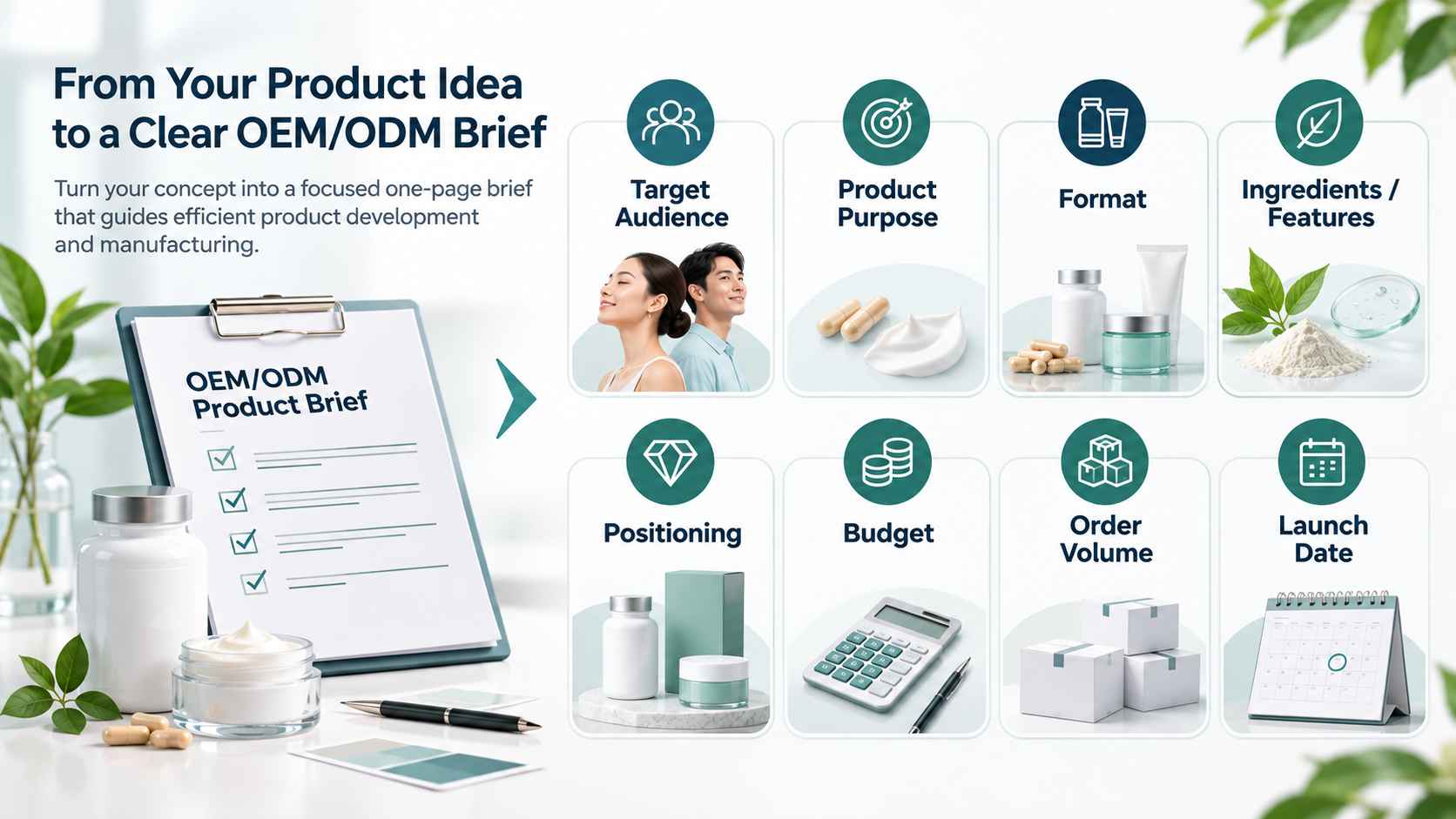
Image 1: Example of OEM/ODM product brief, featuring 8 essential steps for consideration.
4. List Key Ingredients or Product Features
List any preferred ingredients, textures, scents, colors, or other product features. Explain why each matters and separate must-haves from preferences. Include known ingredient exclusions or sensitivities. You can also share reference products or examples that show what you have in mind.
For a supplement, you might name a preferred ingredient or identify an allergen to avoid. For skincare, you might request a lightweight texture or fragrance-free formula. These are starting preferences for technical review; they do not confirm that an ingredient, combination, or claim is suitable.
What to include in your brief:
- Preferred ingredients or features, with the reason for each.
- Must-have requirements versus optional preferences.
- Known exclusions, sensitivities, or ingredient restrictions.
- Reference products, textures, sensory expectations, or supporting research.
When sharing reference products, explain what you want the development team to notice. You may like the texture of one product, the pack size of another, or the way a competitor communicates its product benefits. A reference should clarify one or more requirements; it should not be treated as a request to copy another brand’s formula, design, or claims. If a feature is essential, say why it matters. If it is only an inspiration, make that clear.
5. Clarify Your Product Positioning
Positioning is how you want customers to see your product compared with other options. Consider its price level, brand personality, main point of difference, competitors, and sales channel. For example, will it be practical and accessible, premium and specialist, or designed for a simple daily routine?
Avoid general phrases such as “high quality” or “premium ingredients” without explaining what they mean. Be specific about why customers should choose the product, such as its convenience, format, texture, ingredient approach, packaging, or intended use.
Research suggests that market knowledge and customer insight can support better product launch decisions. Use customer and competitor information to guide positioning rather than relying only on internal preferences (Fakhreddin & Foroudi, 2022).
What to include in your brief:
- Intended market position and target selling-price range, if known.
- Two or three relevant competitors or reference products.
- The product’s intended point of difference.
- Primary sales channels and target markets.
Think about whether the product will be sold online, through pharmacies, beauty retailers, clinics, distributors, or other channels. Each channel may have different expectations for price, pack size, product information, and supply. If you plan to sell in more than one country, list the intended markets at the start. Product classification, permitted ingredients, labeling, and claims may differ by market, so these details should be reviewed before the formula and packaging are finalized.
6. Set a Realistic Budget
A budget range helps the manufacturing partner understand which options may be realistic. If possible, separate your total project budget from your target manufacturing cost per unit. Project costs may include formulation, samples, testing, packaging, artwork, production, and logistics. You may not know every cost yet, but an estimated range is a useful starting point.
What to include in your brief:
- Indicative total project budget or budget range.
- Target manufacturing cost per unit, if established.
- Whether development, samples, testing, packaging, and logistics are included.
- Areas where you can be flexible and features that must be retained.
A useful way to manage the budget is to rank the product requirements. Identify the features that define the concept and should be protected, then list areas where you could consider alternatives. For example, you may be flexible about packaging style but not about pack size, or open to a different flavor while keeping a specific ingredient as a priority. This helps the team discuss cost options without losing the product’s purpose.
6. Estimate Your Initial Order Volume
Give an estimated quantity for your first order, even if it may change. Volume can affect packaging options, sourcing, production planning, and unit cost. If this is a test launch, say whether the order is for a small market trial or a full commercial release.
What to include in your brief:
- Estimated first order quantity and preferred pack size.
- Whether this is a pilot, first commercial order, or ongoing production plan.
- Expected reorder frequency or future volume, if known.
- Any constraints related to storage, inventory, or distribution.
If you do not know the minimum order quantity, do not guess. Share your preferred first order estimate and ask the manufacturing partner to explain the applicable minimums and volume options. You can also indicate the quantity you expect to sell during the first few months. This helps separate the quantity you want to order from the demand you expect to generate.
7. Estimate Your Initial Order Volume
Give an estimated quantity for your first order, even if it may change. Volume can affect packaging options, sourcing, production planning, and unit cost. If this is a test launch, say whether the order is for a small market trial or a full commercial release.
What to include in your brief:
- Estimated first order quantity and preferred pack size.
- Whether this is a pilot, first commercial order, or ongoing production plan.
- Expected reorder frequency or future volume, if known.
- Any constraints related to storage, inventory, or distribution.
If you do not know the minimum order quantity, do not guess. Share your preferred first order estimate and ask the manufacturing partner to explain the applicable minimums and volume options. You can also indicate the quantity you expect to sell during the first few months. This helps separate the quantity you want to order from the demand you expect to generate.
8. Set a Target Launch Date
A target launch date gives the project a timeline to work towards. It is a planning goal, not a guaranteed production date. Development may include concept review, formulation, samples, testing, packaging, artwork, regulatory review, sourcing, production, and logistics. Timing depends on the product and the work required.
Research indicates that supplier involvement can contribute to product development, but its value depends on the project and how the collaboration is managed (Delgado-Verde & Díez-Vial, 2024; Oh & In, 2023). Discuss the timeline with your manufacturing partner once the product requirements are clear.
What to include in your brief:
- Target launch month or date and whether it is fixed or flexible.
- Important milestones or external deadlines.
- Target countries and intended sales channels.
- Any known dependencies, such as packaging artwork or regulatory review.
Also identify decisions that could affect the schedule. These may include finalizing the formula, approving samples, confirming packaging suppliers, completing label artwork, reviewing product claims, or arranging testing. If a launch date is linked to a campaign or retailer commitment, state the date and explain whether it can move.

Image 2 : Turning product ideas into market-ready solutions through expert guidance.
How to Put the Brief Together
Your first brief can be a simple one- or two-page document. Use clear headings and short bullet points rather than long descriptions. Put the most important product decisions near the beginning, then add supporting information such as reference products, customer feedback, competitor examples, or draft packaging ideas. A brief should be easy for someone outside your business to understand without needing a separate explanation.
Before sending it, review the brief from the manufacturing partner’s point of view. Could someone understand who the customer is, what the product is meant to do, and what makes the concept different? Are the preferred format and key features clear? Is the budget a total project estimate or a target unit cost? Is the order volume an estimate or a confirmed requirement? Does the launch date allow time for development and review?
Keep in mind that clear answers help reduce avoidable back-and-forth.
Here is a simplified example of how a brief might summarize an early concept:
- Product concept: Daily powder supplement
- Target audience: Busy working adults who want a convenient daily format
- Purpose: Provide a simple product option that fits into a daily routine
- Format: Single-serve powder sachets; open to pack-size recommendations
Key requirements: Preferred ingredient list to be reviewed for suitability; no added sugar is a preference, subject to feasibility - Positioning: Mid-range, convenience-led product for online sales
- Budget and volume: Indicative first-order budget and quantity to be discussed
Target launch: Planned for the second half of the year; timing subject to development and review
This example is intentionally incomplete. It shows how a brand can communicate a concept’s direction while flagging technical and commercial points that still need discussion. The details should be adjusted to reflect the actual product, target market, and business plan.
A Practical OEM/ODM Brief Checklist
Before contacting a manufacturing partner, make sure your brief covers:
- A clearly described target audience and customer need.
- A concise product-purpose statement.
- A preferred format and acceptable alternatives.
- Key ingredients or features, with must-haves separated from preferences.
- Intended positioning, target price range, and competitor references.
- An indicative budget and what it covers.
- Estimated first order quantity and possible reorder expectations.
- A target launch date, key milestones, and intended markets.
- A list of assumptions, unanswered questions, and decisions that need technical input.
What If You Have Not Decided Everything Yet?
You do not need a finished formula, final packaging design, or complete business plan before starting a conversation. Be clear about what is confirmed, what you prefer, and what is still open. You can label each item “must-have,” “preferred,” “open to recommendation,” or “not yet decided.”
This helps avoid treating early ideas as final specifications. It also helps your manufacturing partner identify which decisions need technical review, sourcing checks, testing, regulatory input, or cost assessment.
Supplier input can bring useful expertise, but it does not guarantee that every initial idea will be feasible (Suurmond et al., 2020; Delgado-Verde & Díez-Vial, 2024). Use your brief as the starting point for discussion and refinement.